Day 01: KALKA RAILWAY STATION – SHIMLA (Approx. 90 KM / 3–4 Hrs)
Our services will start upon your arrival at Kalka Railway Station. Meet and greet by our representative/driver and proceed towards Shimla, the beautiful capital of Himachal Pradesh. Enjoy the scenic drive through the winding mountain roads, lush green valleys and picturesque landscapes.
On arrival in Shimla, check in to the hotel and relax. The evening is free at leisure to explore the nearby surroundings or enjoy the pleasant weather of Shimla.
Day 02: SHIMLA – KUFRI – LOCAL SHIMLA
After a scrumptious breakfast, leave the hotel for an excursion to Kufri. It is a small hill station in Himachal Pradesh, which is widely acknowledged for its undulating mountain terrains and lush greenery. One of the most prominent attractions of this place includes the Himalayan Wildlife Zoo, which is home to a variety of rare species of wild animals and birds. Also, this destination has an amusement park, which is an ideal place to spend quality time with family and friends. After enjoying a sightseeing tour of Kufri, return proceed for a leisure walk in the beautiful Mall Road of Shimla. This road, constructed during British colonial rule, has numerous showrooms, shops, eateries and cafés. Evening Back to Hotel Overnight stay.
Places Covered-
Kufri -Kufri is a small hill station in Shimla district of Himachal Pradesh state in India. It is located 13 km from the state capital Shimla on the National Highway No.22. The name Kufri is derived from the word kufr meaning "lake" in the local language.
Adventure Resort -Adventure Resorts New Kufri HIMACHAL’S FIRST ADVANCED AMUSEMENT PARK surrounded with great Hiking, skiing, beautiful scenes and loads of adventure that’s all about Kufri Fun campus. which is famous for Zip Line 200M,Swing it, Mini Skater, Kangaroo Jump, Wave Train, Smash Car etc. Jakhoo Temple -Jakhoo Temple is an ancient temple in Shimla, dedicated to Hindu deity, Hanuman. It is situated on Jakhoo Hill, 2.5 km /1.3 miles east from the Ridge, Shimla at a height of 2,455 m above sea level -{DIRECT PAYMENT – ROPE WAY} The Ridge -The Ridge road is a large open space, located in the heart of Shimla, the capital city of Himachal Pradesh, India. The Ridge is the hub of all cultural activities of Shimla. Christ Church -Christ Church, Shimla, is the second oldest church in North India, after St John's Church in Meerut. It is a parish in the Diocese of Amritsar in the Church of North India.
The Mall -Mall Road is the main street in Shimla, the capital city of Himachal Pradesh, India. Constructed during British colonial rule, the Mall road is located a level below the ridge. Green Valley View -Green Valley is a picnic spot in Shimla, the summer capital of India during the British regime. It lies on National Highway 22, 7 km away from Shimla on the way to Kufri Hill station. This site is easily noticeable for those who are travelling from Shimla to Kufri. As the name suggests this valley surrounded by small mountains with pine forests is as green as one can imagine. Over Night at Shimla. Visit More in SHIMLA Kali Bari Temple, vice regal Lodge, Indian Institute of Advanced Study
Day 03: SHIMLA –KULLU – MANALI (260 KMS/7-8 hrs)
Today morning after breakfast check out from the hotel and proceed towards Manali On the way to Manali, crossbyPandoh Dam, visit Hanogi Mata Temple and Vaishno Devi Temple. Reach Manali& check into the hotel. Overnight stay at hotel.
Activities in Kullu -White Water River rafting & Paragliding
Day 04: MANALI – SOLANG VALLEY
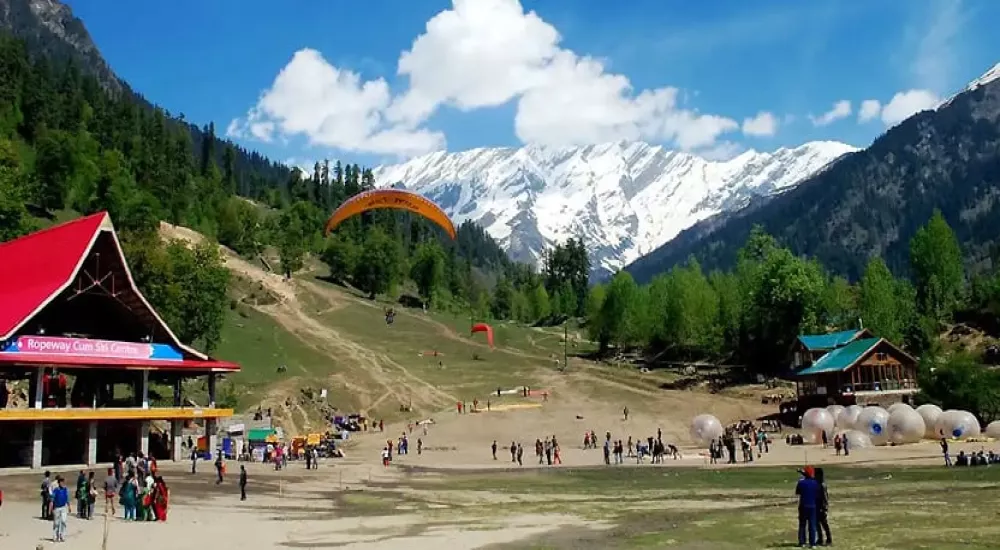
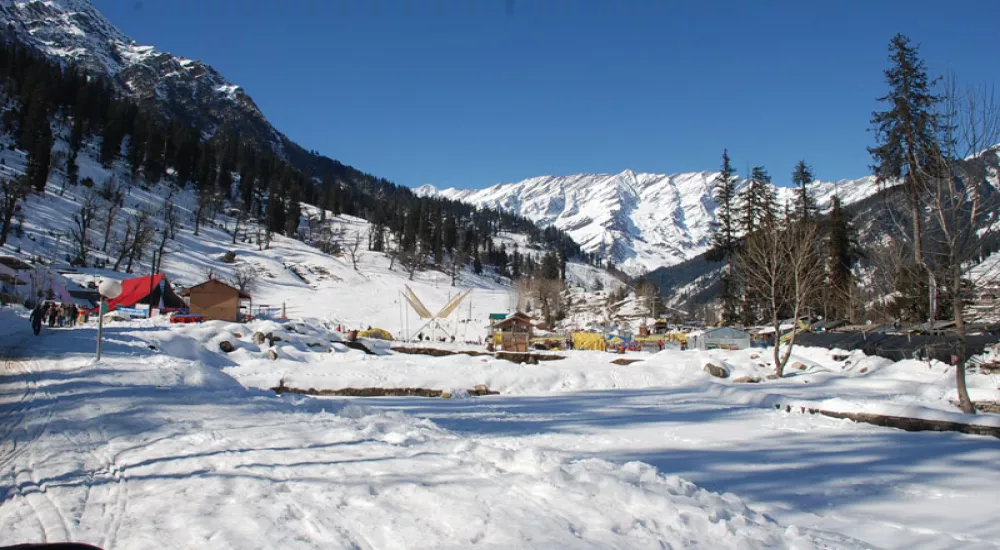
Today morning after breakfast have excursion trip to Solang Valley where you can admire the enchanting sights of the surroundings and can enjoy various thrilling adventure activities by own cost. As the winter approaches, the same Solang Valley takes a shape of a Snowy Blanket, thus forming a perfect vista for several snow activities. After enjoying the outing return to hotel for Overnight stay. Adventure activities at Solang valley – Skiing, Snowboarding ,Zorbing, Cable Car Ropeways, The river crossing, Ziplining, Snow Scooter. {On Extra Cost -Experience the famous Atal Tunnel.}
OPTIONAL ROHTANG PASS TOUR {ON extra Cost & Will OPEN in MID OF MAY & Will close around 15-Nov]
Rohtang Pass upto Snow Line (Snow Line is a barrier point placed by the government to avoid life risks during heavy Snowfall) This spot is famous for adventurous roads and having traces of snow even in heated up summers. However, with increase in global warming few months can be devoid of snow yet the panoramic views that it offers are worth watching. On the way to Rohtang Pass, places to cover will be Kothi, Gorge, Gulaba, Marhi.
Note: Rohtang pass is closed on every Tuesday and during snowfall months/days. NGT (National Green Tribunal) has also limited the number of vehicles visiting Rohtang pass in a day. Thus, this sightseeing will be subject to permit obtained on the spot and extra cost (Permit + Vehicle charges extra). Please Note: Adventure activities will be at your own risk and cost.
Day 05: MANALI LOCAL CITY TOUR
After Breakfast leave for Half day Local sightseeing covering Hadimba Devi temple, VashishKund, Club House, Buddhist monastery. Over Night Stay at the Hotel
Hadimba Temple is dedicated to the wife of Bhim, one of the five Pandava brothers in the Indian epic Mahabharata. As the legend goes, Bhim married Hadimba and they had a son. Later on, Hadimba left the place and became a spiritual.
Manu Temple which is believed to be the only temple of Manu in India, who is considered as the creator of the human race on earth. Located at a distance of 3 km from the main bazaar in Old Manali, the temple is believed to be the abode of Manu, the ancient law-giver of India,
Vashist springs and temple in a tiny hamlet situated on the bank of Beas River that turns towards Rohtang. It is well known for its hot sulphur springs and temples. Taking a dip in this water is considered sacred by many. Nearby is the pyramidal stone temple devoted to Vashist Muni, a revered sage, Nehru Kund is a natural spring in the region. Located at a distance of around 6 km from Manali, it has been named after the late Prime Minister Jawaharlal Nehru. The Kund has derived its name from Nehru, as he used to drink water from it, on his journey to Manali,
The ManaliGompa which serves as an important gathering place for Buddhists from Lahaul, Spiti, Kinnaur, Ladakh, Nepal and Tibet. Built in the 1960s, the new monastery is famous for its wall paintings, Chortens and a large statue of Lord Buddha,
Van Vihar which is a municipal garden is situated in front of the Tibetan market on Mall Road. In the lake located within the park, tourists can opt for boating. The park is adorned with big deodar trees. Evening free for strolling on Mall Road and Shopping in local Market. Late evening drive back to hotel. Dinner and night stay in hotel at Manali. Dinner at hotel.Night Hotel in Manali.
Day 06: MANALI – DHARAMSHALA Mcleodganj (240 KMS / 7-8 HRS)
After breakfast check out from the Hotel & drive to Dharamshala via Kullu (8-9hrs).On the way witness the spectacular sight of lofty mountains, meeting the clouds; lush green valleys and tranquil waterfalls enchanting you throughout your trip.
Dharmshala Cricket Stadium: - Nestled in the lap of the majestic Himalayan mountain range lies the quaint Dharamshala Cricket Stadium, also known as the Himachal Pradesh Cricket Association (HPCA) Stadium. Located at a height of 1,457 masl amidst the Dhauladhar mountain range in Kangra valley, it is one of the highest sports grounds in the world. Operated under the auspices of HPCA, the Cricket Stadium often serves as the practice ground for the Indian Cricket Team, Himachal Pradesh state-level cricket team, as well as Indian Premier League (IPL) team Kings XI Punjab.
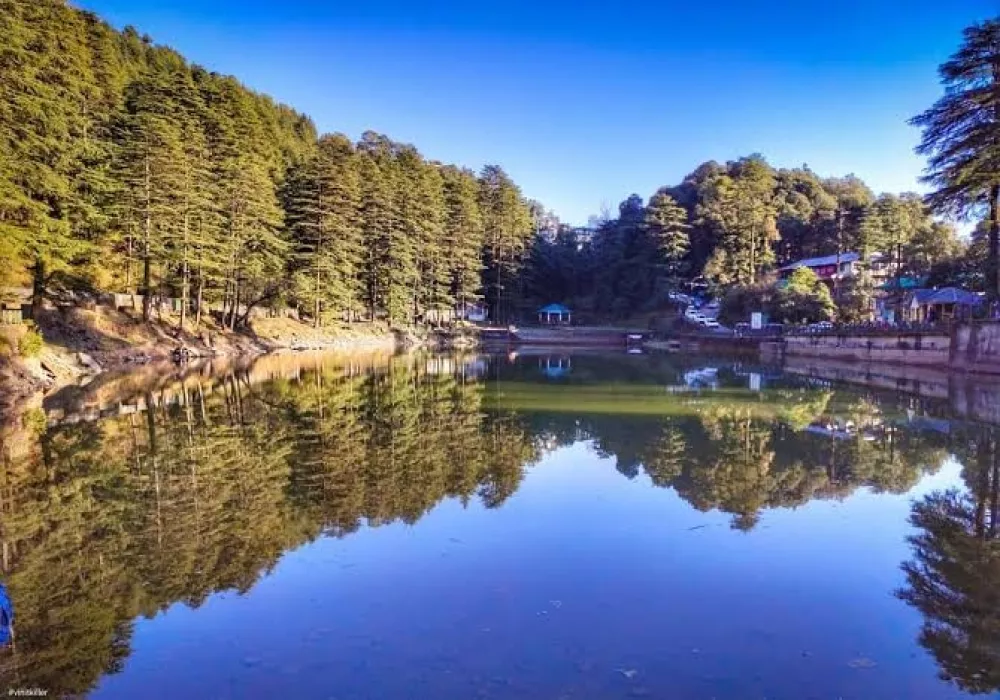
Dal Lake: - Dal lake is 11 km from lower Dharamshala and lies in between hills and deodar trees. This is a starting point for trekking and excursion , which is covered around the lake to make the walk memorable.
BhagsuFalls:- The Bhagsu Falls are situated 2 km away from McLeodganj. Set amidst lush greenery and nature in its most pristine form, these falls are majestic and grand and should not be missed by all tourists travelling here.
Mcleodganj:- McLeod Ganj (also spelt McLeodGanj or McLeodganj) is a suburb of Dharamshala in Kangra district of Himachal Pradesh, India. It is known as "Little Lhasa" or "Dhasa" (a short form of Dharamshala used mainly by Tibetans) because of its large population of Tibetans.
Bhasgunath Temple:- This temple is located at a height of 1770 m above sea level. Surrounded by beautiful pools and lush greenery, this temple attracts a lot of devotees and tourists throughout the year.
Mcleodganj:- McLeod Ganj (also spelt McLeodGanj or McLeodganj) is a suburb of Dharamshala in Kangra district of Himachal Pradesh, India. It is known as "Little Lhasa" or "Dhasa" (a short form of Dharamshala used mainly by Tibetans) because of its large population of Tibetans.
St John Church:- This neo-gothic church was built in 1852 and is one of the most important churches in Himachal Pradesh. Located near Dharamshala and on the way to Mcleodganj , this church was built in dedication to John the Baptist.
War Memorial: - The War Memorial in the forests of Dharamshala was created to commemorate the memory of those who fought to save our motherland. During the Indo-China War of 1947-48, 1962, 1965, and 1971, and UN Peace Operations, many brave soldiers of Kangra lost their lives as war heroes. Three huge panels of black stone, each 24 feet in height, preserve their memory in stone. Overnight stay in Hotel.
Day 07: DHARAMSHALA – DALHOUSIE (145 KMS/5-6 HRS)
Morning after breakfast, drive to Dalhousie (It is also called as mini swizz of India due to its scenic beauty). Arrive & transfer to hotel. Rest of the day at leisure to explore the Market. Overnight stay at the Hotel.
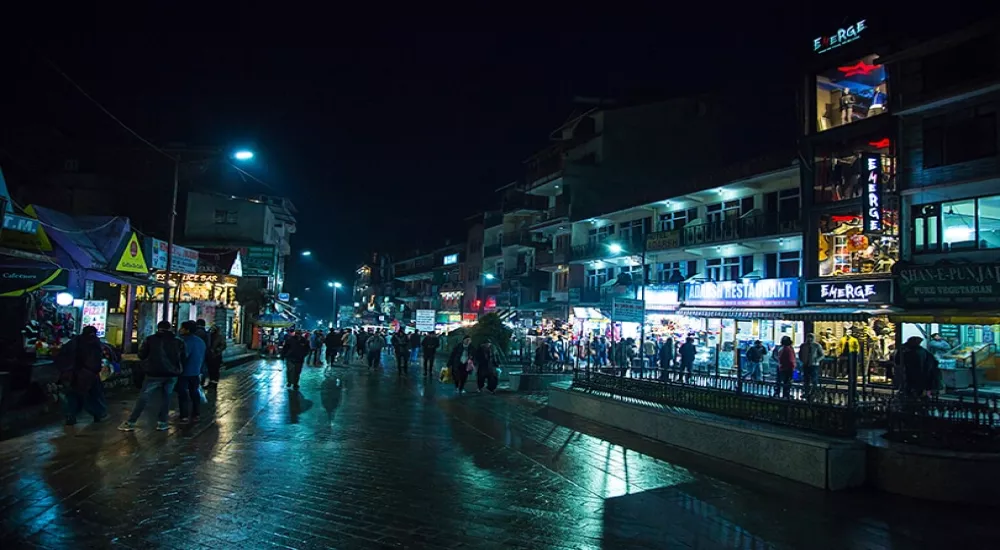
Mall Road: is one of the most notable shopping spots in the city, offering a range of merchandise from dolls to Kashmiri shawls. One can find countless eateries, clubs, bars, inns, hotels, banks on the road. Visitors love to spend the day slowly walking along the winding road, taking in pleasing vistas around, shopping for trinkets, and eating their favourite snacks.
Satdhara water fall: - Satdhara Falls are one of the most popular sightseeing attractions of Dalhousie. Perched at an altitude of 2036 metres above the sea level, the place has derived its name from the seven beautiful springs, which are believed to have several therapeutic values. The reason behind this is said to be the water in these springs, as it comprises of mica, known as 'Gandhak' in local language.
Patrick's Church: Just add St. Patrick's Church to your list. Dalhousie is said to be a melange of nature’s beauty and a glimpse of the Victorian era. Approximately at a distance of 2KM from Dalhousie, lies the St. Patrick’s Church. It is a 104 years old church, situated on Mother Nature’s lap.
Panchpulla: - Literally meaning 'Five Bridges' PanchPulla, is a local favorite with waterfalls, picnic spots as well as a modest trek. It is situated 2 km away from Dalhousie and one can cover the distance on foot, enjoying the landscapes around.
St. John's Church: - This is the oldest church in the town and assumes not only religious significance but has much historical significance too.
Gandhi Chowk: - or GPO, is the bustling and vibrant street of Dalhousie. Unlike other hill stations, Dalhousie doesn't have a mall road, so Gandhi Chowk is the Mall Road of Dalhousie. For shopping in Dalhousie, the town has a number of local bazaars and centres at Gandhi Chowk. One can shop for simple local souvenirs, woollen clothes and every-day treasures.
Bakrota Hills: - This is the highest area in Dalhousie and is circled by a road called Bakrota walk which leads to Khajjar
SubhashBaoli: - Named after the famous freedom fighter Subhash Chandra Bose, SubhashBaoli is a perennial spring which has medicinal properties and believed to have cured the freedom fighter of his ill health. The serene spot is visited by travellers who come here to relish the natural beauty, with the expanded view of the snow-dusted mountains in the distance. Located 1 km away from Gandhi Chowk in Dalhousie, this tribute to the leader is an ideal spot for picnics and evening strolls.
The Tibetan Market: It’s time to explore the Tibetan Market in Dalhousie because shopping makes us all happy. It is situated at Gandhi Chowk and is one of the best places to buy handicrafts. There are also items such as woollen clothes, colourful carpets, and beautifully carved jewellery. The very popular Chamba slippers and shawls are also available here.
Day 08: DALHOUSIE – KHAJJIAR (22 KM/45 MINS) – DALHOUSIE
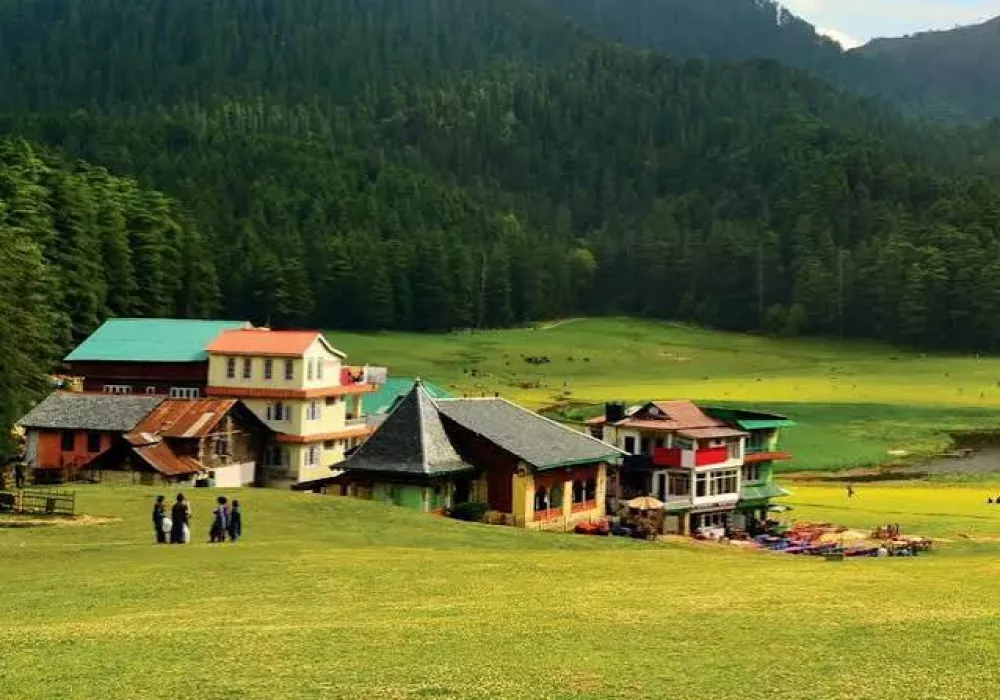
Today after heartily breakfast cover Khajjiar sightseeing. Khajjiar is a place where one can easily spend whole day by admiring the beauty of sparkling Khajjair Lake, wandering in 9 hole golf course or just sit and feel the peace. After such a joyful experience, return to hotel for overnight stay.
Day 09: DALHOUSIE – Amritsar (5 HRS)
Next day after breakfast check out from hotel drive to Amritsar. Amritsar is the largest and most important city in Punjab and is a major commercial, cultural, and transportation centre. It is also the centre of Sikhism and the site of the Sikhs' principal place of worship—the Armanda Sahib, or Golden Temple. Arrive in Amritsar check in the hotel dinner and overnight stay at hotel. Evening time Day lets visit local sightseeing, Golden Temple Hall Bazaar, Wagah Border, Jallianwala Bagh , Maharaja Ranjit Singh Museum, Durgiana Temple , Partition Museum, Gobindgarh Fort, Rambagh Gardens.
2 PM Start for Wagah Border Ceremony
The Wagah Border parade ceremony is a 30-minute event. The event begins with a parade. It’s performed by soldiers of both countries: The Indian Border Security Force and the Pakistan Rangers. Soldiers march by lifting their legs as high as possible. The soldiers for Wagah Border march past are carefully chosen. And they’re trained specially for the Beating Retreat ceremony. Each soldier treats it with absolute seriousness and keeps their movements coordinated. The ceremony is an elaborate show of power and friendship. Prior to it, women and children wave the national flag and dance to patriotic songs. Spectators cheer them with loud calls of “Jai Hind” and “Vande Mataram.” And following the parade, the flags of both nations are lowered in perfect sync. As the flags are lowered and folded, the border gate is opened. The ceremony ends with a brief handshake between soldiers from both sides. Then, the gate, and thus the border, is formally closed until sunrise. People stand in their place to sing the National Anthem and applaud the army. You can feel a sense of pride filling the environment.
Day 10: Drop to Railway Sattion / Airport
Today is the last day of the tour. Relish an early morning breakfast. Complete the check-out formalities. Get an assisted transfer to the railway station / Airport for your onward journey. Thanks to choosing us.


 Here
Here